
Degreasing that rinses clean
Kitchen Floor Degreasing has to remove oils and also remove the cleaning residue. We use controlled water, thorough extraction, and rinse steps so the floor does not feel tacky after it dries.
Serving Grand Prairie, Texas & surrounding areas
Mon–Fri 8am–6pm · Sat 9am–2pm
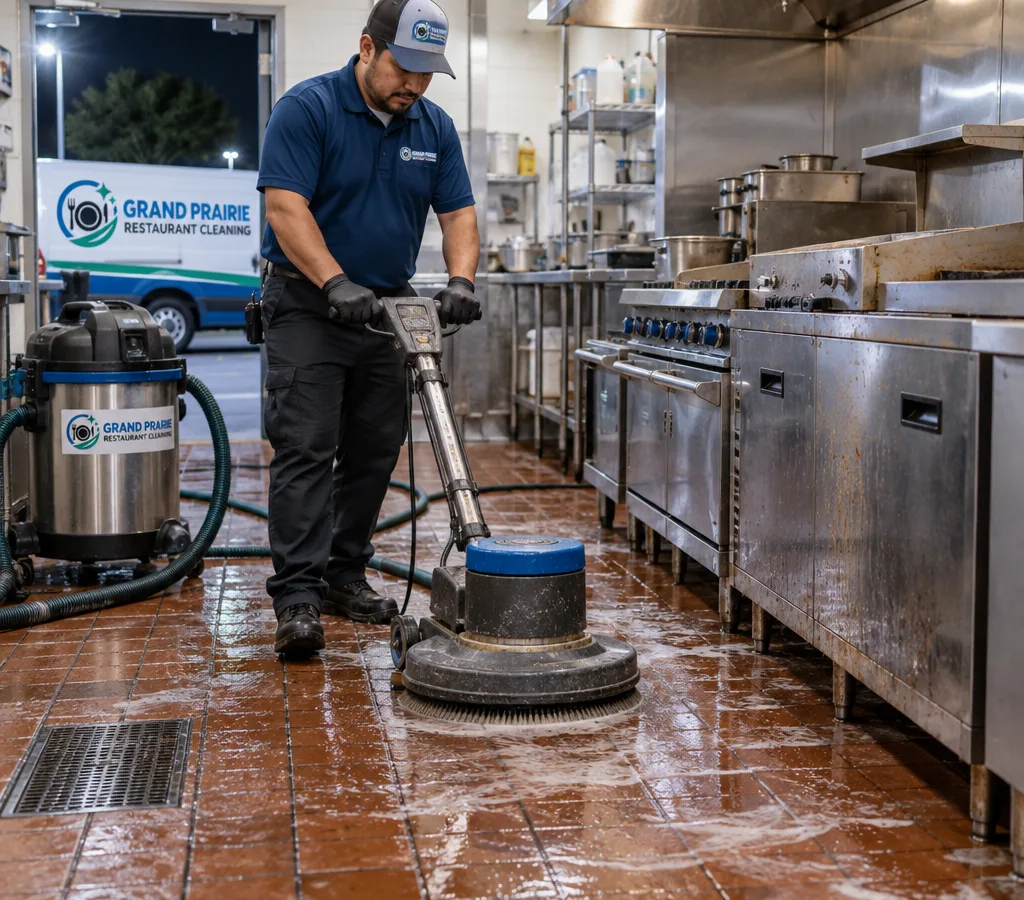
Get your kitchen floors back to a clean, high-traction surface with scheduled or after-hours service, detailed degreasing, and careful attention to grout lines and edges where buildup starts.
Restaurant floors take a daily hit from cooking oils, tracked-in grit, drink spills, and constant foot traffic. Over time, grease migrates into texture, grout joints, and the edges around equipment. Mop water spreads it around, and the floor starts to look dull while staying slick.
Grand Prairie Restaurant Cleaning provides Restaurant Floor Cleaning Services built for real back-of-house conditions: quarry tile, porcelain, non-slip coatings, and textured surfaces that need the right chemistry and agitation to release oil without damaging the floor. The goal is simple: a cleaner surface that helps your staff move safely and helps you keep the kitchen inspection-ready.
If you need broader help keeping front and back of house consistent, start with professional restaurant cleaning and we can coordinate floor work with the rest of your routine cleaning schedule.
A lot of “clean-looking” kitchen floors still have grease packed into grout lines, corners, and transitions. That's where Restaurant Tile Cleaning and Restaurant Grout Cleaning make the difference.
Our process focuses on:
This is Commercial Kitchen Floor Cleaning, not a quick pass with a mop. When floors are heavily soiled, we may recommend more than one initial visit to reset the surface, then a maintenance cadence that keeps the floor from sliding back into grease saturation.
For Restaurant Floor Cleaning Grand Prairie operators, after-hours work matters. We plan around your slow periods so you are not juggling wet floors during prep or service.
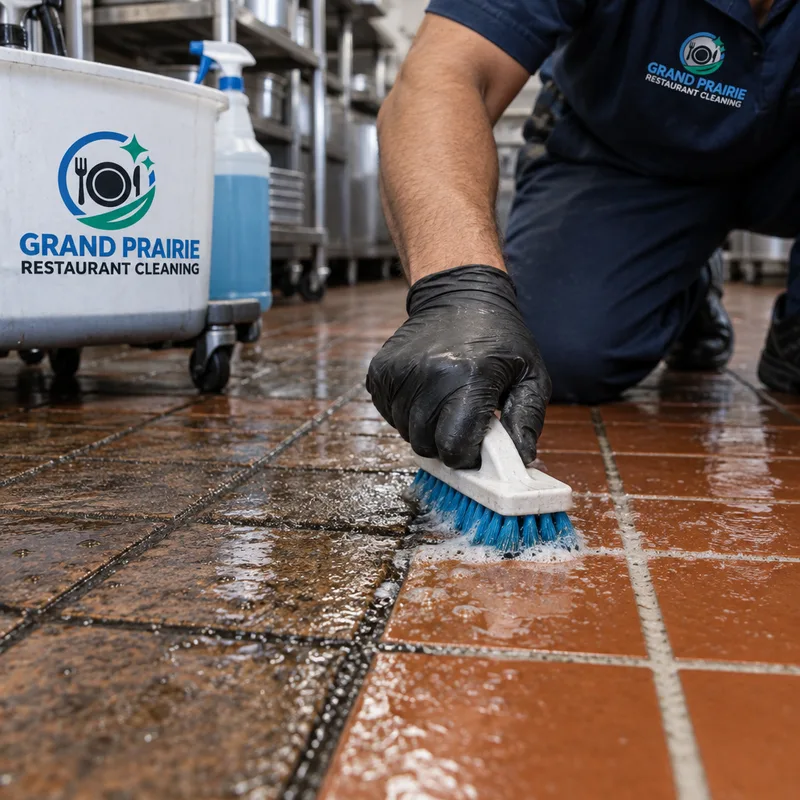
Kitchen Floor Degreasing has to remove oils and also remove the cleaning residue. We use controlled water, thorough extraction, and rinse steps so the floor does not feel tacky after it dries.
Restaurant Floor Degreasing should improve footing, not leave a film. We focus on correct dilution, dwell time, agitation, and recovery to avoid slippery residue.
Most kitchens need floors done when the line is down. We schedule around closing, prep windows, or off-days to keep your operation moving.
Quarry tile, ceramic, and textured porcelain can handle different approaches than sealed concrete or coated floors. We choose methods that clean without stripping surfaces unintentionally.
You will get a written scope that defines areas, frequency, and what is included—edges, drains, and entry lanes—so the service stays consistent from visit to visit.
We identify the heaviest grease zones—cook line, dish pit, bar service, and back entrance—the floor material, and any coatings. We also note safety needs like wet-floor staging and traffic control.
We apply a kitchen-safe degreaser to break down oils, with extra attention to grout, corners, and transitions. Dwell time matters, especially on textured tile and grout.
We scrub using the right pads or brushes for the surface, then hand-detail edges, behind and under reachable equipment gaps, and around floor drains where grease concentrates.
We rinse and extract thoroughly so residues are not left on the floor. We help the floor dry faster with controlled passes and airflow planning so you can reopen safely.
If your kitchen produces heavy oils, a recurring Commercial Floor Cleaning Grand Prairie schedule keeps grease from rebuilding in grout and texture. We can set a cadence based on traffic and cooking style.
Most Restaurant Floor Cleaning Services in Grand Prairie typically range from about $200 to $650 per visit for small to mid-size kitchens, while larger, heavier-grease back-of-house floors—with grout detailing and edges—often run $650 to $1,500+ depending on scope and access.
Pricing changes with square footage, tile and grout condition, amount of degreasing needed, obstacles and equipment clearance, after-hours scheduling, and whether you want a one-time reset or recurring maintenance. The exact price is confirmed after a walkthrough of the kitchen floor and problem areas.
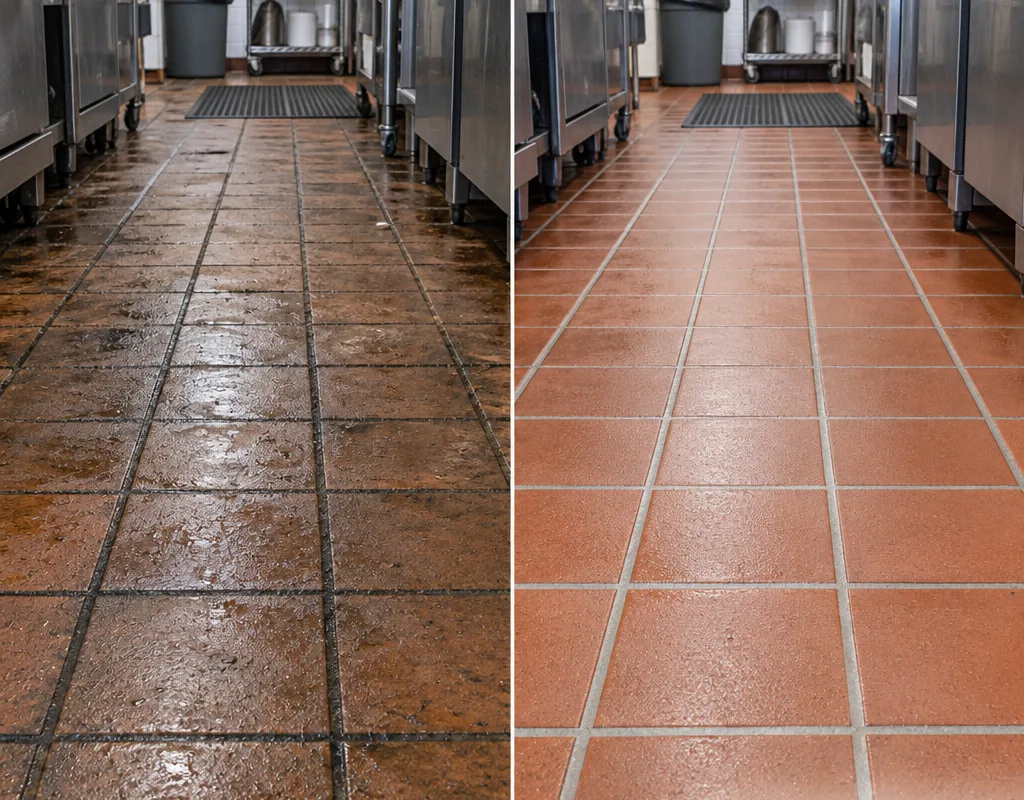
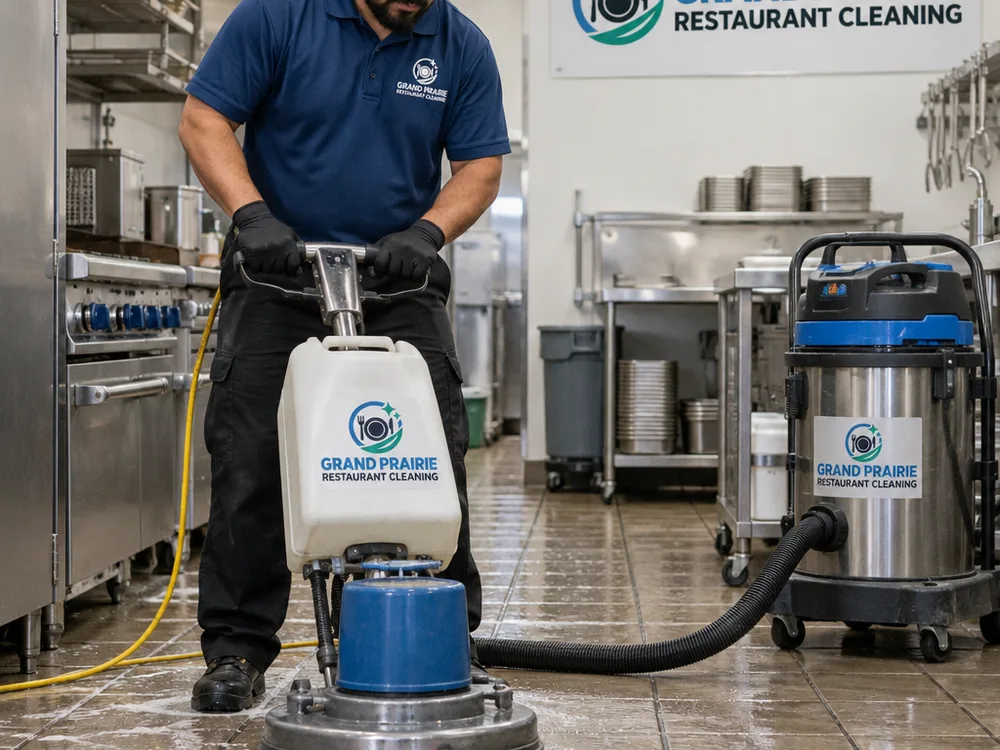
“We had grout that looked permanently black behind the line. After the first deep clean, the tile actually had texture again and the floor stopped feeling slick at the end of the night.”
“They worked after closing and left the kitchen ready for morning prep. The corners and edges were the big difference for us, not just the open floor.”
“We set up a recurring schedule and it keeps the grease from building back up in the grout. It has been easier for our crew to maintain between visits.”
Most commercial kitchen floor cleaning jobs take 1 to 3 hours, depending on square footage, grease load, and how much detailing is needed around edges and drains. Heavily impacted grout or textured tile can take longer because it requires slower agitation and more thorough rinse and recovery.
Grease in grout can usually be improved significantly, but results depend on how long oils have been embedded and whether the grout is worn or previously sealed. Restaurant grout cleaning works best when the floor gets a proper rinse-extraction step so the grease and residue are lifted out instead of redistributed.
Yes, quarry tile and textured non-slip tile are common in restaurant kitchens, and they typically need mechanical scrubbing to release grease from the surface texture. We match pads and brushes to the floor so we clean effectively without damaging the tile or leaving slippery residue behind.
The floor can be slick while it is wet, which is why we stage the work and control traffic until dry. Once the floor is rinsed and extracted properly, it should feel cleaner and more grippy than a floor that has grease or detergent film left behind.
Many restaurants do best with a deeper degreasing on a monthly or quarterly cadence, then maintain with daily cleaning that is appropriate for kitchen oils. Frequency depends on cooking volume, fryer use, and traffic patterns between the line, dish area, and walk-in.
To quote accurately, we need the approximate square footage, floor type—tile and grout, sealed concrete, or coated surface—access constraints, and whether the kitchen can be cleared or worked around equipment. A walkthrough in Grand Prairie helps confirm the heaviest grease zones, floor drain areas, and any spots that need extra detailing.
Tell us the floor type, kitchen size, and the areas that stay greasy—cook line, dish, bar, or drains. We will recommend the right level of restaurant tile and grout cleaning and a schedule that fits your hours.