
Back-of-house degrease and soil removal
Detail cleaning for prep areas, floors, walls, and high-touch points where grease and food soil build up. We focus on corners, edges, and behind/under equipment where buildup often starts.
Serving Grand Prairie, Texas & surrounding areas
Mon–Fri 8am–6pm · Sat 9am–2pm
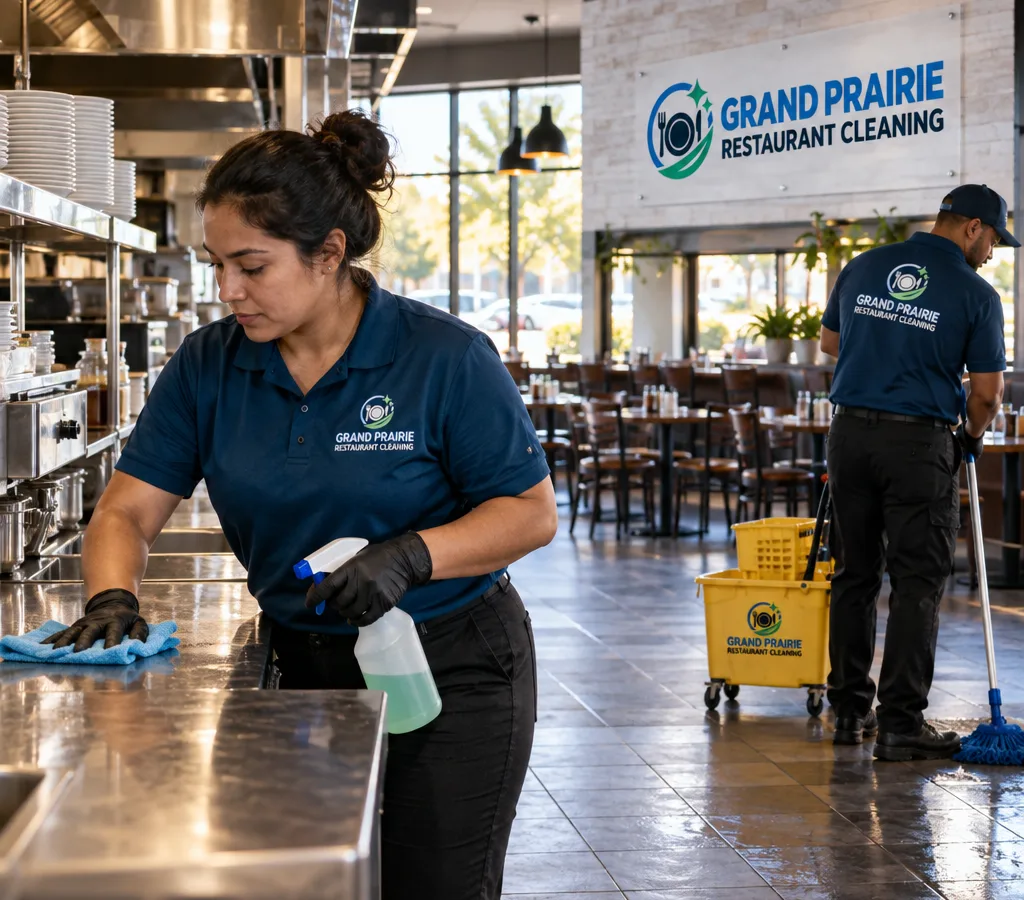
Keep your kitchen, dining room, and restrooms ready for service with scheduled, detail-focused cleaning that fits restaurant hours and inspection expectations.
Garland Restaurant Cleaning needs are different from typical commercial janitorial work. Restaurants deal with grease, food soil, constant foot traffic, and tight turn times between shifts. The goal is simple: a clean, safe facility that holds up to guest expectations and health inspections, without disrupting prep and service.
Grand Prairie Restaurant Cleaning provides restaurant cleaning for Garland operations that want consistent results across the whole facility: back-of-house, front-of-house, and everything in between. We build cleaning plans around how restaurants actually run, including early-morning, overnight, and low-traffic windows when detailed work is easier to complete.
If you are comparing options across the metro, our broader restaurant cleaning services in Grand Prairie cover the same standards and methods we bring to Garland accounts, with scopes adjusted to your layout, hours, and inspection priorities.
Detail cleaning for prep areas, floors, walls, and high-touch points where grease and food soil build up. We focus on corners, edges, and behind/under equipment where buildup often starts.
Tables, chairs, baseboards, floor care, and spot attention on fingerprints and spills. The work is paced to protect finishes while keeping the guest area consistently presentable.
Disinfecting touchpoints, addressing odors at their source, and cleaning floors and fixtures so restrooms stay inspection-ready and guest-ready.
Door hardware, rails, switches, faucet handles, and other contact points cleaned and disinfected with products selected for commercial environments.
Cleaning around waste areas, drip zones, and frequent-spill locations to reduce sticky floors and lingering smells that can spread into dining spaces.
Good restaurant cleaning starts with a clear scope. Two restaurants can be the same size and still need very different work depending on menu, volume, layout, and how often equipment is moved.
We typically start by walking the facility and noting:
From there, we set a plan that separates routine cleaning from periodic deep cleaning. That matters because the details that drive inspections and odors are often the same details that get missed when everything is treated as a quick nightly wipe-down.
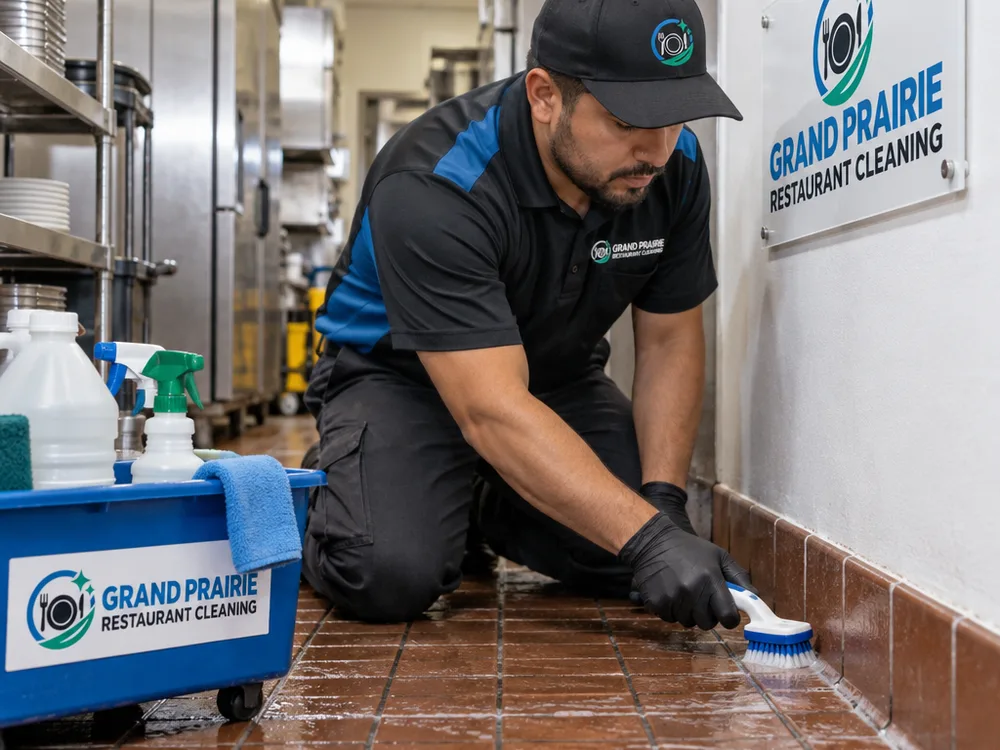
We review the kitchen, dining area, and restrooms with you and define what is included, what is excluded, and how often each area is addressed.
Restaurants do not have time for cleaning crews during rush periods. We plan work for low-traffic windows and confirm access, alarms, and key procedures before the first visit.
We work top-to-bottom and back-to-front to control re-soiling. Grease-prone zones get dedicated attention before floors are finished.
We verify completion against the scope and document issues that affect cleaning quality over time, such as damaged grout, failing caulk lines, or areas that need more frequent attention.
If your volume changes seasonally or you add equipment, the scope should change too. We update routines so the cleaning stays consistent instead of gradually slipping.
Garland Restaurant Cleaning typically ranges from about $300 to $1,800+ per month for ongoing service, depending on square footage, cleaning frequency, and how grease-heavy the kitchen is. One-time deep cleaning commonly runs about $400 to $1,500+, based on the areas included and the amount of buildup.
Your final price changes with hours of operation, number of restrooms, floor type (and grout condition), equipment access, and any add-ons like periodic detail work. Exact pricing is confirmed after an on-site walkthrough and a written scope.
“We needed a consistent routine that covered the kitchen corners and the restrooms, not just the dining floor. The scope was clear, and the work quality stayed the same week to week.”
“They scheduled around our close and were done before prep. Floors looked better, and the sticky spots around the dish area stopped coming back.”
Most restaurants do best with recurring service multiple times per week, with periodic deep cleaning layered in monthly or quarterly based on grease and traffic. A small dining-focused concept may need less frequency than a high-volume kitchen, but restrooms and high-touch points usually need consistent attention regardless of concept.
Yes. A practical scope covers BOH (prep areas, dish zones, floors, walls where needed) and FOH (dining area floors, touchpoints, baseboards, and spill-prone areas), plus restrooms. Keeping these areas on one coordinated plan helps prevent a clean dining room from being undermined by odors or tracked soil from the kitchen.
Yes. Many restaurants prefer cleaning during low-traffic windows like overnight or early morning so the crew can work efficiently and safely. During the walkthrough we confirm access details and set expectations for what areas must be clear for cleaning to be completed properly.
Restaurant cleaning requires more attention to grease, food soil, and slip risk, plus stricter routines for high-touch areas and restrooms. It also needs sequencing that matches how kitchens operate, because cleaning around equipment, mats, and narrow BOH pathways takes planning and the right products for commercial surfaces.
The fastest way to get consistent results is to clear floors where possible, store loose items, and identify any areas that should not be moved or touched. If equipment cannot be moved, we plan around it and focus on reachable edges and buildup points so the scope stays realistic and repeatable.
Yes. A written scope sets expectations for what is cleaned, how often, and what the crew needs for access. It also makes it easier to add periodic deep-clean items, like grout lines or behind-equipment zones, without guessing what was included the last time.
Tell us your hours, layout, and problem areas, and we will put together a written scope that fits your operation and keeps kitchens, dining areas, and restrooms consistently clean.